Teamwork, tactics and data: behind Wigan’s pre-season training | Wigan Athletic

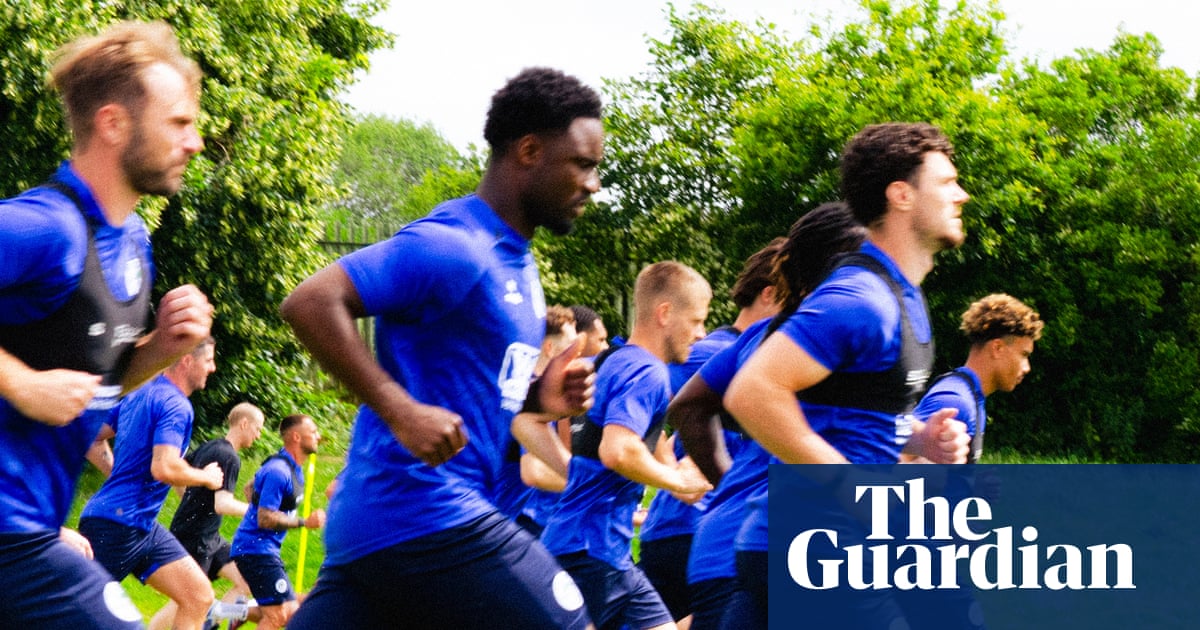
“TGary Caldwell says the only rule I will give you for the rest of the season is: ‘team first’.” The Wigan coach speaks in a Scottish accent that sounds good when he hears the soft sound of a projector in a darkened classroom at the Christopher Park training ground.
Three rows of professional athletes listen intently, eager to learn not only what the day holds, but about the next 10 months.
Some will see it through to next May, others could leave before the 2026-27 League One campaign kicks off on August 14, and new faces will be added.
It’s preseason and before the football carousel starts spinning, there’s still a lot of work to be done.
The meeting is short, just long enough for Caldwell to squeeze in a few points of wisdom. As he talks, head of performance analysis, Lauren Jones, plays clips from their “best practice bank”.
Because he, Caldwell, and first-team coach, David Perkins, only joined from Exeter in February (physio, Michael McBride, and goalkeeping coach, Kevin Miller, followed this summer), the bank is small, but growing.
There are plenty of standard football clips for Caldwell to use, but he appreciates “boys seeing players in Wigan shirts doing what we ask of them”.
Perkins relays the day’s schedule – a 1.5km time trial, a couple of exercises, some off-the-cuff exercise and an afternoon weights session – before the class is dismissed and told to reconvene on the grass in 45 minutes.
There is no idleness, however, the whole group soon starts working on itself (for old money, warming up).
The bodies are filled with an indoor gym with bands, benches and foam rollers used as equipment to mobilize muscles and parts of the body.
The Wigan center is, by modern standards, modest but functional. A printed sign lays out simple rules: £50 fines for anyone with a phone, wearing slides or a bum.
When defender James Carragher finds out that the Guardian is joining the morning run, a penalty of double that amount is announced if anyone doesn’t hit the visiting reporter. At 10.55 am, strength and conditioning leader, Matthew Barrow, explains that the run consists of 15 pitch lengths and 14 turns. “Boys have their choice – boots or trainers, but I recommend boots so you don’t lose time turning.”
“I’m glad I don’t,” Caldwell said, laughing. “It’s a big test and anything like that involves people pushing themselves.”
It’s not the team’s first pre-season test. Their first day back included a series of physical and strength exercises “designed to give us a benchmark,” Caldwell said. “If they are injured, we know where to return them.”
But the days of players reporting being overweight are long gone, with only a small number exceeding their ideal numbers during bodybuilding tests. “That will be over in the first week or so,” Caldwell said.
Running for the sake of running is also a thing of the past. Instead, Barrow and sports scientist Jack Craigie will use running data to find an individual’s maximum aerobic speed. “From there, we choose each person for every job they will do,” said Craigie. “For example, if we have a scheduled volume session, rather than giving a standard number of lengths, we grade individuals based on their results. That way they all get the same incentive.”
At 11 am, the players are running on warm-up laps. According to the sign-in sheet outside the workers’ offices, some arrived at the site three hours ago. The physio area just outside the gym has a lot of visitors, a combination of prevention and treatment. Breakfast was enjoyed in the canteen which served as a meeting point for staff and players.
It marks a comfortable start compared to other mornings. With no travel plans, Caldwell finds other ways to escape the monotony. Several 6am meetings preceded a 3.5km run to my partner’s gym for a solid, Hyrox-style workout. With players working in trios, employees are interested in attitude and behavior as well as resilience.
“We’re taking the team out of their comfort zone to see how they react under pressure,” Caldwell said. “We can look at the energy that a person brings at 6 in the morning when others are tired, that will help us know who will pick up the team when we are a little tired.”
after the promotion of the newsletter
Those moments also promote Caldwell’s “team first” principles. “If you’re not ‘working’, you still have to play a role,” he says.
The morning run feels relatively mild, although after several pitches the empty vision is dismissed. Nobody loses £100 in club kit.
Soon the balls are out and the team is divided into two groups for a series of tests. Impressive power, with Max Power, who recently joined Wigan for the third time, between ton sets.
In one exercise he encourages a young teammate to pass, only for a defender to block the space. Rather than getting frustrated or ending the offense, Power quickly gets another chance to put the same ball together and recommend a successful outcome. “When a player is better, they give people a little stick, I get it,” said another employee. “They want everyone to improve.”
The challenge for the workers is to control the momentum, they build up. Caldwell avoids specifically asking players to hold back, but with a drone monitoring everything and GPS data available in real-time, times can be adjusted accordingly. Sometimes it’s as simple as walking cones for a few yards.
With one machine, the tape on the grass creates twelve boxes, where three banks of four must work to create and find spaces. “Football is sometimes chaotic,” Caldwell said, smiling. “If we give them more space, they will use it.”
Building upwards is Wigan’s aim. The supporters want to return to recent success, which is natural after eight seasons as an established team in the Premier League. That ended in 2013 – the year they lifted the FA Cup at Wembley with Caldwell in the team.
Four Championship relegations and three League One promotions followed, including Caldwell’s first full season in charge. That was 2015-16 and the third division title was claimed.
Caldwell’s immediate challenge last season was to avoid relegation to League One, and patience is needed in the next step.
After lunch, the day ends at the gym with a short, intense, high-intensity session. In one corner, pull-ups, in the other well-designed jackknives.
“When the season starts, practice goes hand in hand with games,” said Barrow. “But since the time is here now we can really chase that hypertrophy.”
Pre-season was once enjoyed in the summer, but in 2026 it’s a meticulous, data-driven, foundation-building exercise.
Payment will be notified only next May.