How LNZ Cherkasy became a wartime success story with few modern parallels | Conference League

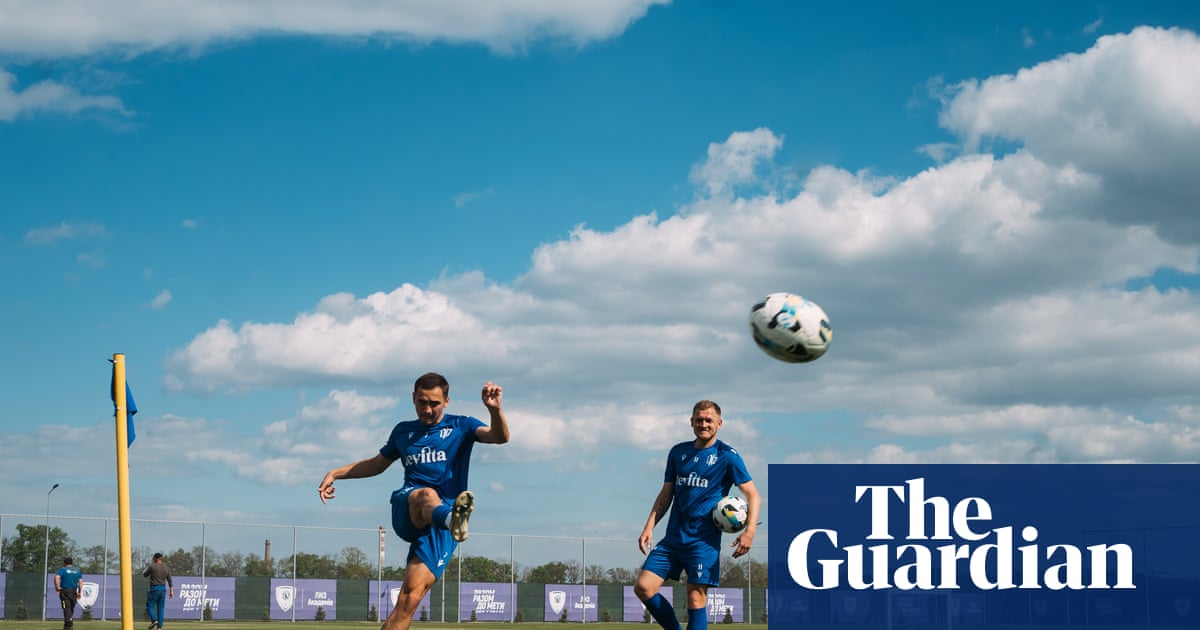
Iit’s time for set-piece training at the smart, shiny LNZ Cherkasy training center. “Arsenal!” one player said with a laugh as a fight started in the corner, the joke spreading among the others gathered in the six yard box. That’s the standard everyone here should aspire to, but they come close. This week a local club that was a football powerhouse in Ukraine will make its European debut in a wartime success story with few modern parallels.
“We’re making history,” LNZ forward Mark Assinor said after breaking away from the session. “But there has been a change in the way of thinking here and I think this is the beginning of the club.”
On Thursday, they will face Belgian team Gent, old hands in this division, in the second round of the Conference League qualifiers. LNZ earned that right last season by finishing second in Ukraine’s top flight: a remarkable achievement as they were playing fourth-tier football as recently as 2021 and turned professional last year.
One of the first markers after the seemingly endless six-mile journey across the Dnipro river is a billboard that reads: “Cherkasy, the football center of Ukraine” in LNZ’s striking purple tone. The heart of the country sits a long way from here but the local club is now brimming with ambition and faith. LNZ were top of the league at mid-table in 2025-2026, finishing behind powerhouse Shakhtar Donetsk, but there was still something surprising about it.
“No one expected anything from us,” said Vasyl Kayuk. Sitting in the cafeteria opposite the team’s downtown headquarters, he’s helping to polish off the post-training buffet made for the team. At 26, Kayuk is the youngest CEO in the history of Ukraine’s top flight. “The biggest motivation and advantage is that you are young and no one believes in you.” Along with the young, enthusiastic staff alike he is determined for LNZ to break the mould.
“The city has never had anything like this,” said Kayuk. LNZ has been around for 20 years but, in a football landscape that has been disrupted since the full-scale invasion of Russia in February 2022, it is a rare example of a club growing rapidly. Its owners, an agribusiness based in the area where the club takes its name, have sown the seeds with purposeful investment despite ongoing national unrest and the aim is to build a long-term success story that serves as a beacon for Ukraine.
“We always say that we are not athletes, we are marathon runners,” he said. “We want to build our club and it is stable.” LNZ exceeded all expectations in its third season in the top flight, having finished 12th last year. When they made waves with a 4-1 win at Shakhtar last October, with Assinor among the goalscorers, there was a false charge. A string of draws later in the campaign meant Shakhtar withdrew but the foundations were laid to ensure LNZ remained serious contenders.
An unusual old face in setting up such a youth, their manager Vitaliy Ponomaryov uses words of caution. “I don’t think that, if we celebrate this success today, it will help us tomorrow,” he said, returning to the training ground. “I really told the players today that we should forget about everything, set new goals, and continue to grow.”
In some ways the 52-year-old Ponomaryov is from the old Ukrainian school: a straight-talking and no-nonsense coach. But he has hidden depth, including a spell playing in top-flight games as an assistant referee in the 2000s. Since moving last year from Rukh Lviv, where he worked with Kayuk, he has created a versatile, highly functional and comfortable side that plays in a mix of styles.
after the promotion of the newsletter
“It was difficult last season but he came and gave us the idea to win,” said Assinor. The Ghanaian was surprisingly discovered in 2024 after playing in obscure outfits in Poland and Slovakia, effectively assembling a Test set-up that isn’t meant to pay big money. “When we saw that we had a chance to achieve something, everyone started to believe. He encouraged everyone when he came in.”
LNZ will host the first leg against Gent in the Polish city of Plock. Ukrainian teams are still required to play their European matches abroad due to the unfavorable situation at home. It affects every area of life even in a lively, forward-thinking club like this one. In the gym one of the physios, Artur Pohorilyi, explains his time as a military medic and how he survived the explosion near Izyum in 2023. The team doctor, Roman Mishchenko, spends time working at a hospital for wounded soldiers in Cherkasy where LNZ also donates money. Mishchenko also works on Ukraine’s complex program for disabled footballers.
A few miles down the river, in a reconstructed Soviet-era sanatorium, the LNZ academy is nurturing tomorrow’s stars. The Under 16 coach, Alexei Bulgakov, was working for the defunct FC Mariupol before Russia invaded and took over the city. He managed to escape but the cost, his house was destroyed and being separated from his family, he could not imagine. Bulgakov speaks vividly about a life he grew up immersed in domestic football, describing the games between 52 teams of workers at Mariupol’s giant Ilyich steel plant.
Among his current cases are a number of youths from illegally occupied areas in Ukraine. Some of their parents remained in those areas. He says: “We talk to each other, we talk about the place and buildings in our cities, and we expect that one day we will be able to return. “The team understands how difficult things are for young players who come from these areas, and it is very happy to give them opportunities.”
They hope for a future in the fast-growing LNZ setup. The training ground is new and impressive by Ukrainian standards but is considered 35% complete, with three other stadiums, an indoor dome and a new stadium planned for the site. That process could take another five years. Crowds at their worn-out city center ground tripled last season to more than 2,000, no small feat in wartime. Children under the age of 14 can go for free and a culture of matching is fostered in the city that eventually made its name in elite football.
“We want to make this city purple, with our special color,” said Kayuk. “This club belongs to our people, but we want the Ukrainians to associate themselves with us, with the center of the country. And when they think of Cherkasy, they think of football. We want to be a real force in our league.” A clash with Arsenal’s cornerbacks still looks a long way off, but Gent could be the first foreign rivals to feel the power of the purple wave.