Chadian judge and former FA chief ‘criticises’ Infantino’s leadership of FIFA and his abuse of African rights


July 20 – The former secretary general of the Chad FA and a local judge wrote an open letter to FIFA president Gianni Infantino criticizing his leadership and bad decisions during the World Cup. He also attacks Infantino for destroying Africa’s independence and the right to self-governance, as well as his disbanding of the Africa riband AFCON finals.
Adjib Koulamallah, a magistrate and former Deputy Secretary General of the Chadian Football Federation, does not want to follow the leadership of Infantino’s controversial decision; within FIFA, during the World Cup, and in Africa.
Koulamallah says that although few in Africa have ever spoken out against Infantino’s regime, he says he is not alone in his criticism “which is being whispered in all VIP forums across Africa.”
Infantino lived a good life in Africa which was the basis of his power base as the confederations were humbly defeated by a series of decisions imposed by FIFA over a period of 10 years which has lost CAF financial guarantees and sponsors, called national confederations of sponsors and TV deals, and reduced the value of AFCON in the eyes of the whole world.
Koulmallah says that the reason why Africa is silent is not “ignorance. Our leaders see what the rest of the world sees. It is not silent because of indifference: there is no place where football is more popular, has a deeper experience, or is more important than here. Africa is silent because its silence is budgeted.”
FIFA regulates confederations by withholding or delaying grant money. “There is no need to buy anyone: one has to start leaning, and leaning does something else. Those who criticize know what they risk delaying; those who applaud know what they hope to speed up,” said Koulmallah.
Koulmallah makes the point that the FIFA grant “is not a gift; it belongs to us. Africa’s share of the wealth its players, its talents, and its fans help create on such a large scale.”
He uses the FIFA management of his organization in Chad as an example of abuse of African countries by FIFA for their own purposes.
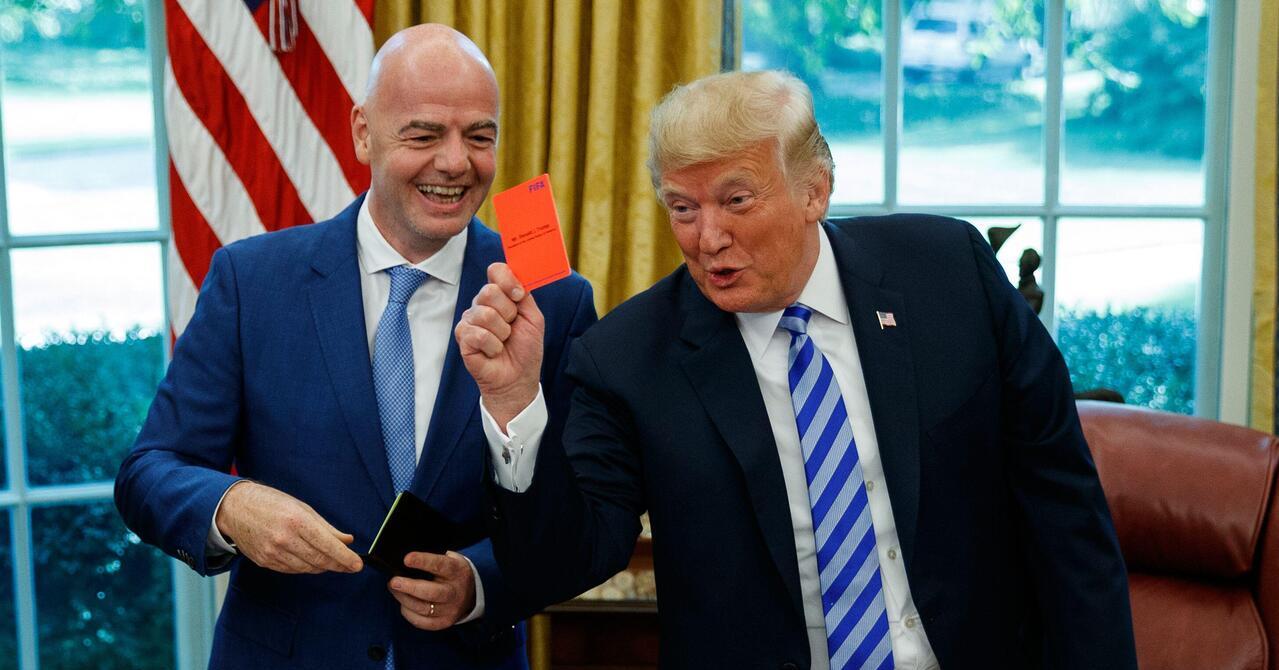
Regarding Infantino’s wider governance of FIFA, he criticizes the decision to revoke the red card of Foralin Balogun with the intervention of the American president Donald Trump; the awarding of the ‘FIFA Peace Prize’ to Trump; FIFA’s usual lack of transparency and Infantino’s misappropriation of expenses including his Doha apartment and private jet; and making decisions about the official designation of the game.
“I doubt your decision. Any magistrate knows the law of our court: it is not enough that justice is done; it must be seen that it is done,” said Koulmallah.
“He did the exact opposite at a time when the whole world was full of doubt.”
He closes his letter with a message to the CAF federations: “I say this to CAF: you are not a branch office, stop voting like before, I say this to the players and fans of this continent: this game belongs to you, not to someone who pulls out envelopes.”
The full text of Koulamallah’s book is published below, translated from French.
Contact the author of this story at [email protected]
CHAD 🇹🇩 – FIFA: THE OPEN BOOK OF THE PRESIDENT OF FIFA. Adjib Koulamallah to Gianni Infantino.
Mr. President,
I I speak at the same time when my entire continent is silent. And I want to start by explaining why it’s quiet.
Africa is not silent because of ignorance. Our coalition leaders see what the rest of the world sees. It is not silent because of indifference: nowhere is football more popular, more experienced, or more important than here. Africa is quiet because its peace is budgeted.
Every coalition is waiting for its development grant, its “Forward” project, its artificial voice, its small headquarters. There is no need to buy anyone: one simply creates a dependency, and the other is a dependency. Those who are critical know what they are risking to delay; those who applaud know what they hope to speed up. A quarter of FIFA voters vote as one, round after round, and we are asked to believe that this represents unity. It is not unity. It is a debt to our dignity, which is paid in peace.
I don’t owe anything and I don’t expect anything. I have served my union for eight years, I have been in charge of the party for seventeen years, and I am a magistrate by profession: judging the powerful by their actions is my job. So, I will say it plainly—put my name to it—what is being whispered about in all the VIP forums across Africa.
And I start by reminding you where you come from. February 2016: he arrived in the middle of the crisis for Blatter’s plan, a few months after US authorities arrested soccer officials around the world in the morning at luxury hotels in Zurich. You were not human *despite* those scandals; you were a candidate *because* of them. He promised a new, transparent, ethical FIFA; he vowed that the institution would never again be what it once was.
The bottom line, ten years later: political awards made to some, sanctions lifted by telephone, quotas that can’t be contested, a silent ethics committee, and US federal authorities back at the soccer door—in the middle of your World Cup. You are no better than you say to replace. You have learned to choose your friends carefully.
I condemn what just happened before our eyes during your World Cup. On July 1, an American player was red-carded in the Round of 32. The rule has always been the same for everyone: red card, suspension. The president of the United States—who calls himself your friend—called you. And on Sunday, your disciplinary committee lifted the sanctions on the eve of the next match. The Belgium coach joked: “I didn’t know that July 5 is April Fools’ Day in FIFA.” Mr. President, if the red card can be canceled by a phone call from Washington, what weight will a decision against the interests of a powerful person have tomorrow? Which African confederation will still dare to challenge a suspension, a penalty, or a referee’s decision?
I condemn the “Peace Prize” that you created without interruption and presented—on December 5—to that same head of state, without published conditions, without a judge, and without consulting your Council, while publicly pledging to support him. A human rights organization referred the matter to your ethics committee, citing a breach of the duty of neutrality. The Norwegian coalition supported the appeal. 50 Members of the European Parliament want an investigation. Seven months later, your ethics committee is still silent. It was very active in the past when dealing with others. Everyone can draw their own conclusions.
I condemn the lack of transparency that has become the way of management—the Doha apartment, the private jets, the unanswered questions, and the World Cup turned into a revenue-generating machine: the cost of driving tickets at variable prices ran into thousands of dollars and the fans were left to fend for themselves, all while FIFA directed the most profitable cycle in its history. I condemn the 2034 World Cup being awarded without competition—by declaration—following a closed process over a period of weeks; only one coalition in the world had the courage to oppose the process, and it was not African.
And as I write this, your Referee Committee has added allegations to allegations. For Thursday night’s quarter-final match between France and Morocco, Argentina has appointed a management team—a referee, two assistants, a fourth official, a reserve official, and even a VAR team. This is the first time in this World Cup, it happened while Argentina was in the tournament. I know there is nothing in your laws that prohibits this. Yet everything about the circumstances contradicted it: the Argentinean coalition under investigation by the US government forty-eight hours ago; the intense Franco-Argentina rivalry from the 2022 final; and the African team whose fate would depend on the referee’s whistle. I do not doubt the sincerity of Mr. Tello—who wanted none of this.
I question your judgment. Any magistrate knows the fundamental rule of our courts: it is not enough that justice be done; it must also be seen to be done.
He did the very opposite at a time when the whole world was full of doubt; you chose an appointment that heightens that doubt. One might think that the blame is no longer a concern—or that it serves one’s best interests.
Finally, I reject what you have done to me. Our CAF operates as an administrative office in Zurich. Our AFCON—our flagship event since 1957—has been treated as an outlier in the calendar of European clubs, to the point where European coaches themselves have had to demand African recognition. And my country, Chad, has remained institutionalized for years: a contentious adaptation process, unresolved complaints, and a vacuum that is allowed to swell with its procedures until the State has to intervene—at which time, suddenly, your sacred principle of “non-interference” found no fault in the intervention. Impartiality chooses: the heartless and the weak, the blind of the strong.
People may ask: what about established platforms, academies, grants? My answer is: this development is not a gift; it is our responsibility. It is part of Africa’s wealth that its players, its talents, and its fans help create on such a large scale. The debt we owe is not repaid by hard work. The day we accept that all subsidies deserve a vote and every project is peaceful, we will no longer have unions: we will have subsidiaries.
So I say this to my brothers in the African federations: our silence does not protect our interests; it simply ensures that nothing will ever change in the harvest. I say this to CAF: you are not a branch office; stop voting like him. I say this to the players and fans of this continent: this game is for you, not for someone who pulls out envelopes.
And I say this to you, Mr. President: On July 19, you intend to present the trophy together with your friend, as if this World Cup is for both of you. Know that at least one African voice will have refused to participate in the organized applause.
You can only buy what is on sale. My vote is not there.
By Adjib Koulamallah, magistrate and Deputy Secretary General of the Chadian Football Federation.
N’Djamena, July 2026