2026 World Cup: Will Nauru, a small Pacific island, finally hold the ball?

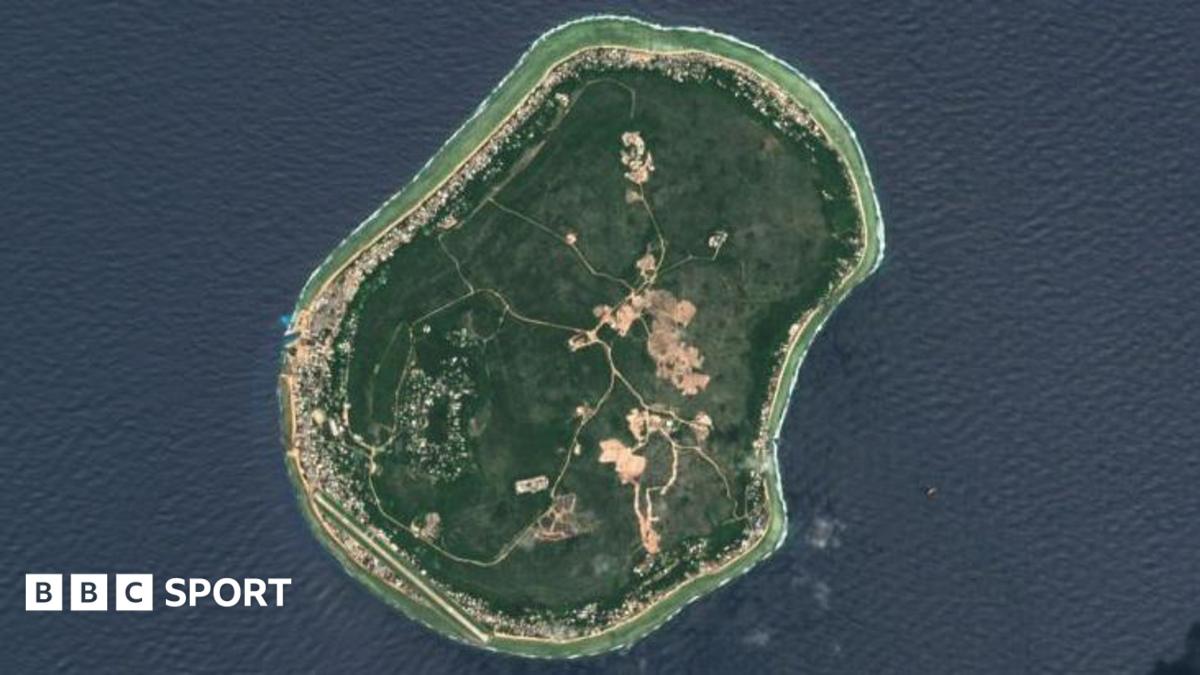
Nauru has tried to develop football in the past, but it never took off. The closest time to playing an international match where the representative teams faced the Solomon Islands team in 1994 and the refugee team in 2014.
Its complicated past goes some way to explaining why the world’s most popular sport has struggled to catch on.
Located in the Pacific Ocean 2,500 miles northeast of Australia, Nauru’s historical wealth is built on its large phosphate deposits from fossilized bird poo.
Nauru, which was a dependency of Australia until it gained independence in 1968, was heavily mined in the late 20th century. Minerals dried up, leaving the land once named Pleasant Island a rugged landscape, with large parts of its central areas uninhabited and extremely challenging to farm.
This has resulted in most of the 12,000 people congregating on the edge of the coast with only 21 square kilometers of usable space on the island. And even that is declining, with climate change and rising sea levels threatening its very existence.
Its arid land has left the country importing 90% of its food – much of it processed, contributing to 69% of the population being considered obese and nearly 40% suffering from type 2 diabetes.
One of its main sources of income now comes from Australia’s immigration detention center which has been around for most of this century.
Daily life on the island can be a struggle and sports have been a strong release for many, but the sport of choice is Aussie rules, played by 30% of the locals. Also famous for athletics and weightlifting, Nauru participated in the Olympics.
Nauru will host the Micronesia Games in 2028 – a multi-sport event that includes football and will demonstrate the island’s desire to raise its international profile through sport.
“They’re trying to change the image for the better and get involved in the sport,” said Pomroy, Nauru Soccer’s technical director and one of eight volunteers aiming to promote soccer on the island.
“See [Nauru] they want people to see the world in a positive way rather than a joke.
“So whether it’s football, whether it’s Aussie rules, whether it’s rugby, basketball, cricket, weightlifting… being part of building a healthy Nauru is enough.
“But as a football fan, the best way I know how to make an impact is through football.”
And the Briton, who hails from Stevenage and works at his hometown club when they’re not playing, has the track record to prove it.
Previously, he founded a charity organization in the Cambodian city of Siem Reap which eventually turned into a higher education institution that produced 47 players who have progressed to play well in the Asian country, and he also has successful programs in India that bring football to neglected communities.
All his projects have different challenges. One of the first challenges in Nauru is finding some balls on the island.

/https%3A%2F%2Fsportsmole-media-prod.s3.gra.io.cloud.ovh.net%2Fuploads%2F2026%2F04%2Fimago1075785696-69f1c41377d96073966575.jpg "Preview: Indonesia All-Stars vs Aston Villa – prediction, team news, lineup")

/https%3A%2F%2Fsportsmole-media-prod.s3.gra.io.cloud.ovh.net%2Fuploads%2F2026%2F03%2Fseabra-69cc295b3aa3e223592802.jpg "Preview: Coritiba vs Cruzeiro – prediction, team news, schedule")