Nico Williams, Ferran Torres and Spain’s versatile World Cup beauty | 2026 World Cup

As Spain entered the second half of extra time of the World Cup final on Sunday, it was clear that Argentina were hoping to trouble them. Every challenge left no stud unshown. Their defenders worked hard to stop striker Mikel Oyarzabal from his regular lines, Spain taking eleven of 20 attempts from outside the box.
Lionel Scaloni’s side may have been aggressive, but they were also organized enough to withstand Spain’s relentless pressure. From the 62nd minute, when Luis de la Fuente gave away his first two charges from the bench, Spain were used to finding new ways to attack, they got used to the dismissal of Enzo Fernández towards the end of normal time.
In his 106th minute at right back, with Lamine Yamal balancing Argentina’s defense on the edge of the box, Pedro Porro looked at the scrum that was developing outside the box. Early in the game, his teammates were running alongside him, but they were restrained enough in their movement to create precious yards of open space beyond the back line. When Yamal passed back to his running mate, many in the field thought it was one of many repetitions to start another route.
Instead, Porro went for a cross. The Tottenham defender curled it perfectly, powerful enough to leave other defenders in two minds about how to react but not so much that he risked crossing the line. Nico Williams was quick to do so, only to find that his supporting numbers were a little behind the ball due to a late arrival in the box.
Williams spent more time at the 2026 World Cup watching from the sidelines than he would have liked. A starter in all six of Spain’s Euro 2024 triumphs, Williams arrived in the country with a hamstring strain and problems picked up late in the La Liga season before the final exit against Uruguay injured.
The Athletic Club midfielder has never started a game at this World Cup, with his 45-minute substitution against Argentina being the longest of the tournament. On Sunday, his entry promised more skill and less confidence than the midfielder he replaced, Alex Baena, who had been underperforming before the exit.
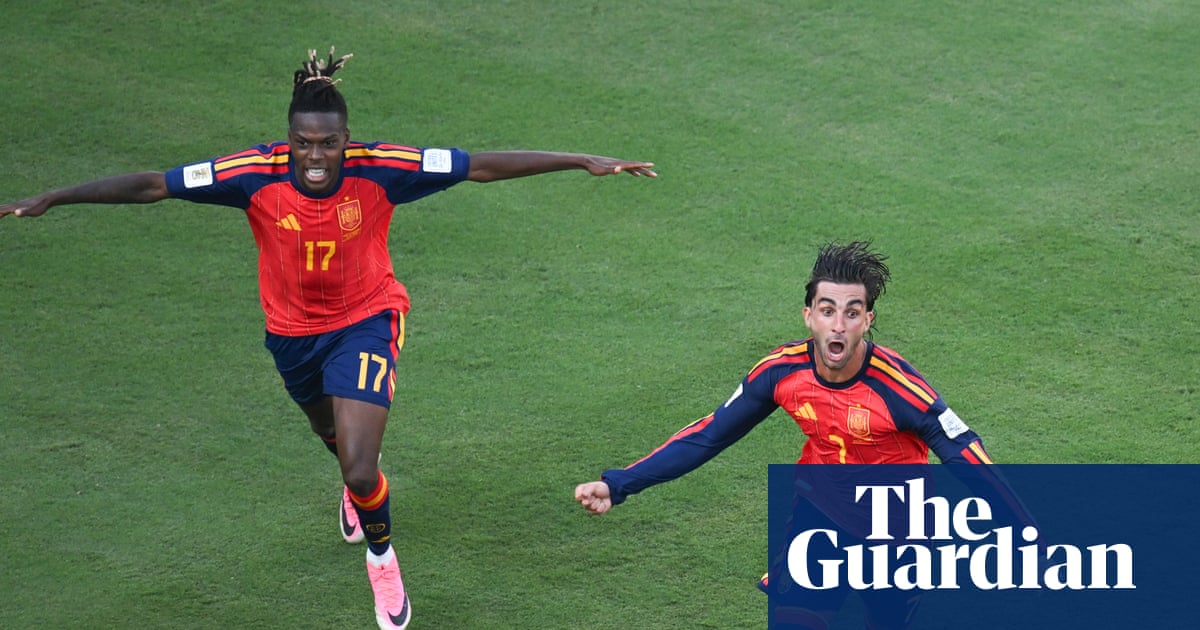
Better late than never, Williams didn’t waste his chance when it came. When Porro’s cross came back to Earth, the 24-year-old put his head on the ball to avoid reaching the heart of the six-yard box, but instead crossed the nearby defenders and put in another second-half substitute, Ferran Torres. It was a goal scored from a premature penalty, the only way Spain could break down an Argentina side desperate to find Emiliano Martínez on penalties.
Like Williams, Torres has tried to exploit Argentina’s path to the final. While Oyarzabal proved useful for Spain in possession, able to go deep and help build up while backing up to find seams at the back to get in, Argentina were prepared to allow that, but prevented him from getting the ball close to goal. Torres provided more finesse, more of a natural off-the-ball mover in the more dynamic stages of the game, but he also came with more gas in the tank that helped him stay sharp against an quickly tiring group of veteran Argentines.
In the finals of the tough challenges, Torres’ run was not looked at at all. Giuliano Simeone, the closest player to Torres, almost took himself out of the game as Torres passed him. Just before Williams prevented the ball from going out, Simeone had checked that the pass was too ripe and was already bending over to adjust his sock when Williams’ head hit Torres. Argentina’s back three were hiding from Mikel Merino, who scored the winners against Portugal and Belgium, leaving Torres with an unusual amount of time and defensive pressure to put Spain on course for a second men’s World Cup title.
Throughout the tournament, Spain has been talked about as the best team in the tournament. The collaboration was so close that, even if they didn’t score, the team’s focus on their creation rarely waned. The players were so confident in their victory under de la Fuente that each of them seemed eager to accept their role even if it meant that they could not be seen individually in the World Cup hosted by their stars.
That is a rare balance in modern international football. Although the club side of the game has been carefully selected, with all pressures and passing sequences carefully rehearsed, playing for the national team is often where the stars will enjoy their game with a team that is built to account for their strengths and weaknesses. Thomas Tuchel tried to encourage a similar culture with his team selection, but found himself shining on the midfielders after Jordan Henderson’s celebration.
It makes it much easier to take groups down to the star they are designed to support. If it works, as it has so much for Messi’s Argentina, few will doubt the wisdom of the approach. If it doesn’t happen, as we saw with Cristiano Ronaldo’s Portugal, it is an obvious problem the coach is not willing to solve.
Like the best clubs in the world, even Fuente has been able to change the way Spain plays during games by signing players who would have occupied the same positions as the starters who would fill them because each of them interpreted their role in a different way. Williams’ approach on the wing gave him more leeway to put the enemy on the back foot than Baena’s; Torres entered the game and later on he would successfully extend Argentina. Even Pedri – who came on for Torres just after the hour mark – made life more difficult for Argentina, as a midfield player more suited to Rodri than Fabián Ruiz.
While Argentina looked to work in the mid-afternoon New Jersey sun, Spain got used to it. They continued to evolve to find new ways to make the defending champions sweat. And, with a professional cross, a smart and intelligent header, and a opportunist who swings in space, it is Spain who will enter the 2030 World Cup cycle at the pinnacle of sports.